
By Pablo de Villota, Sports Sponsorship Director of PROA Comunicación
In the sequel to the famous film 'Back to the Future', they jumped back in time from 1985 to 2015, and it has to be said that the screenwriters got a lot of things right in terms of how they foresaw the world three decades later. However, in terms of mobility, the truth is that they didn't get it right. No flying cars, or anything even remotely resembling them 30 years later. Granted, it is a simple fictional comedy, but the example serves to explain the difficulty of planning for the future in this area.
If, for example, we rewind back just five years, you could be labelled as a crazy old-fashioned person if you questioned the future of the battery-electric car. It was taken for granted that it was only a matter of a few years before combustion-engined cars would be history. Regulations and industrial plans began to be dictated, without taking into account the fundamental premise in any technological paradigm shift: Wishes propose, but realities dispose. Predictions of mass deployment of the electric car have not only failed to materialise, but in many places are actually going backwards.
Something similar has just happened in Madrid City Council with the revocation of licences for electric scooter concessionaires. On paper, an electric scooter was a good alternative to relieve traffic congestion in cities, but then reality comes along and it is seen that it generates more problems than it solves. The proof of the pudding that scooters have not turned out to be as good an idea as it seemed is that no new licences will be issued. The aim is to "prioritise the physical integrity and safety of the people of Madrid" in the words of the mayor himself.
In an ideal world, scooters would contribute to cleaner and more efficient mobility in the city, but when there is a lack of driving licences, safety measures such as helmets, number plates and insurance comparable to those of cars and motorbikes that pay road tax, things change a lot. Leaving the success of the initiative to depend on the responsibility, expertise and civic-mindedness of its users unfortunately never works. History teaches us that when there are no rules and sanctions to abide by, good intentions are not enough.
Wishes and realities
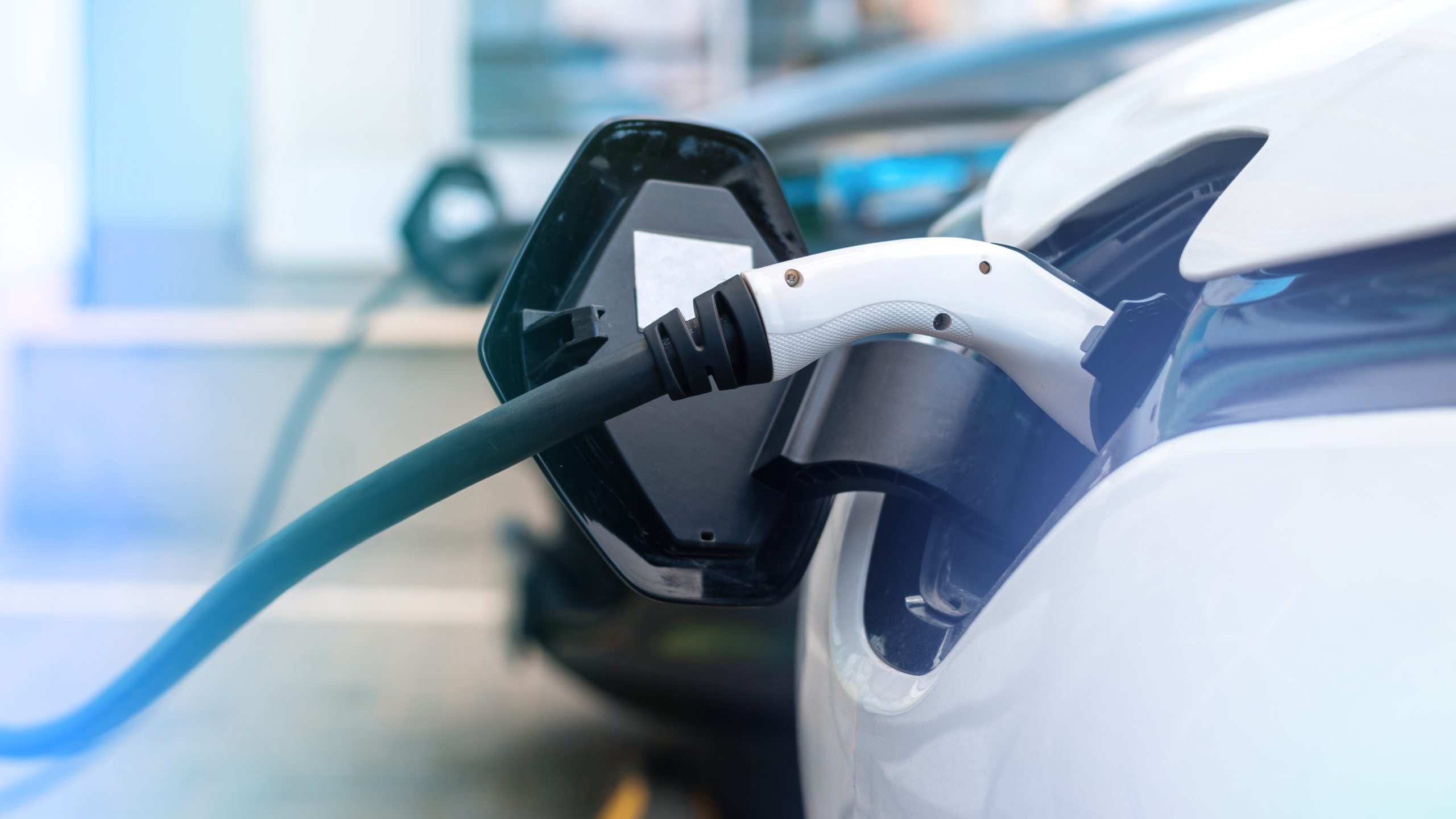
And this same clash of desires and realities is what has happened with the introduction of electric cars. If they were affordable, easy to recharge and versatile, it would have been a different story. But make no mistake, if the forecasts of exponential growth have not been fulfilled, it is simply because they are not an alternative today. Forget about lobbies or disinformation campaigns. One thing is what politicians, manufacturers and customers would like to see happen, and quite another, what the realities allow one or the other to happen.
And in the midst of all this ceremony of confusion, a geopolitical or trade war issue, depending on how you want to look at it, has turned the whole initial approach to mobility upside down. It turns out that the US and Europe (especially Germany) were promising to be very happy with the electric car, and in the end, they realised that it was going to be their grave. The traditional car brands were rubbing their hands together in anticipation of regulations aimed at replacing the combustion car with the electric car. But they made a terrible miscalculation by underestimating the power of China.
The value chain of a battery electric car, in terms of raw materials and large-scale manufacturing, is in China, not in North America, let alone Europe. The Germans were the champions of industrial offshoring from Europe, because they relied on the value added of their R&D. But it turns out that in record time, the Chinese are now capable of making vehicles comparable to European ones and much cheaper. And of course, that Germany that advocated free trade has suddenly realised that its cars, motorbikes, trucks and buses need a tariff to avoid being wiped off the market.
And by magic, hydrogen now coincidentally emerges as the saviour balm of the European mobility industry. But there is no such thing as coincidence in life. Once it has been proven that the battle for the electric car is lost against China unless there is a certain degree of protectionism, the recovery of the combustion car emerges with a vengeance. That model that was so much reviled, despite being the technological leader. A shot in the foot, of course, by the Brussels bureaucrats. And hydrogen has to do with all this trade war, because it is the key element to be able to move the current vehicle fleet from red to green.
Hydrogen and its challenges
To put it simply, hydrogen in mobility has three application areas. The best known so far is the fuel cell. This in-car technology works in exactly the same way as a battery-powered electric car, but in this case with a membrane battery powered by pressurised hydrogen. The second is synthetic fuels made from a mixture of hydrogen and plant waste. And finally, there is the direct use of hydrogen as a fuel in traditional diesel and petrol engines, after minor modifications have been made to them.
Each of the above applications has significant challenges and limitations to be solved. But crucially, hydrogen meets the two major demands of today's mobility, namely sustainability and availability. The goal of zero carbon emissions is achieved in the same way as with electric cars, and refuelling times and refuelling points are exactly the same as for traditional fuels. However, when it comes to making plans and prophecies around this technology, it is important to be cautious, as was so lacking with the electric car.
For the whole process to be truly sustainable, hydrogen has to be reformed in a wind farm or solar farm. At present, this process is mostly done by burning fossil fuels, so it is not very green. Moreover, scalability is needed to make it affordable because its current production costs are prohibitive. However, once these problems are solved, the big advantage is that hydrogen can flow through the natural gas distribution network by separating gas and hydrogen through a natural process at the destination.
Does this mean that the battery-electric car is doomed? Far from it. Oliver Blume, the CEO of Porsche, a company that has made a strong commitment to both battery-electric cars and hydrogen-related technologies, recently declared, that it is reasonable to think that both technologies will coexist.The electric vehicles will predominate over short distances and hydrogen vehicles over long distances.
Mobility is one of the most complex industries in the world, which is why it is so difficult to guess where things are going to go in the medium and long term. If Apple, with all the money and technological know-how in the world, had to cancel its plans to enter as a vehicle manufacturer, we can get an idea of how difficult it is to make plans in this field. There is unanimous agreement that all roads lead to the Rome of sustainability, but the routes to get there are already many. And some of them, as we have seen, are also full of pitfalls. For these reasons and in this context of uncertainty, companies committed to sustainable mobility need to have a well-designed and effective communication strategy and management.
Pablo de Villota, Sports Sponsorship Director of PROA Comunicación