
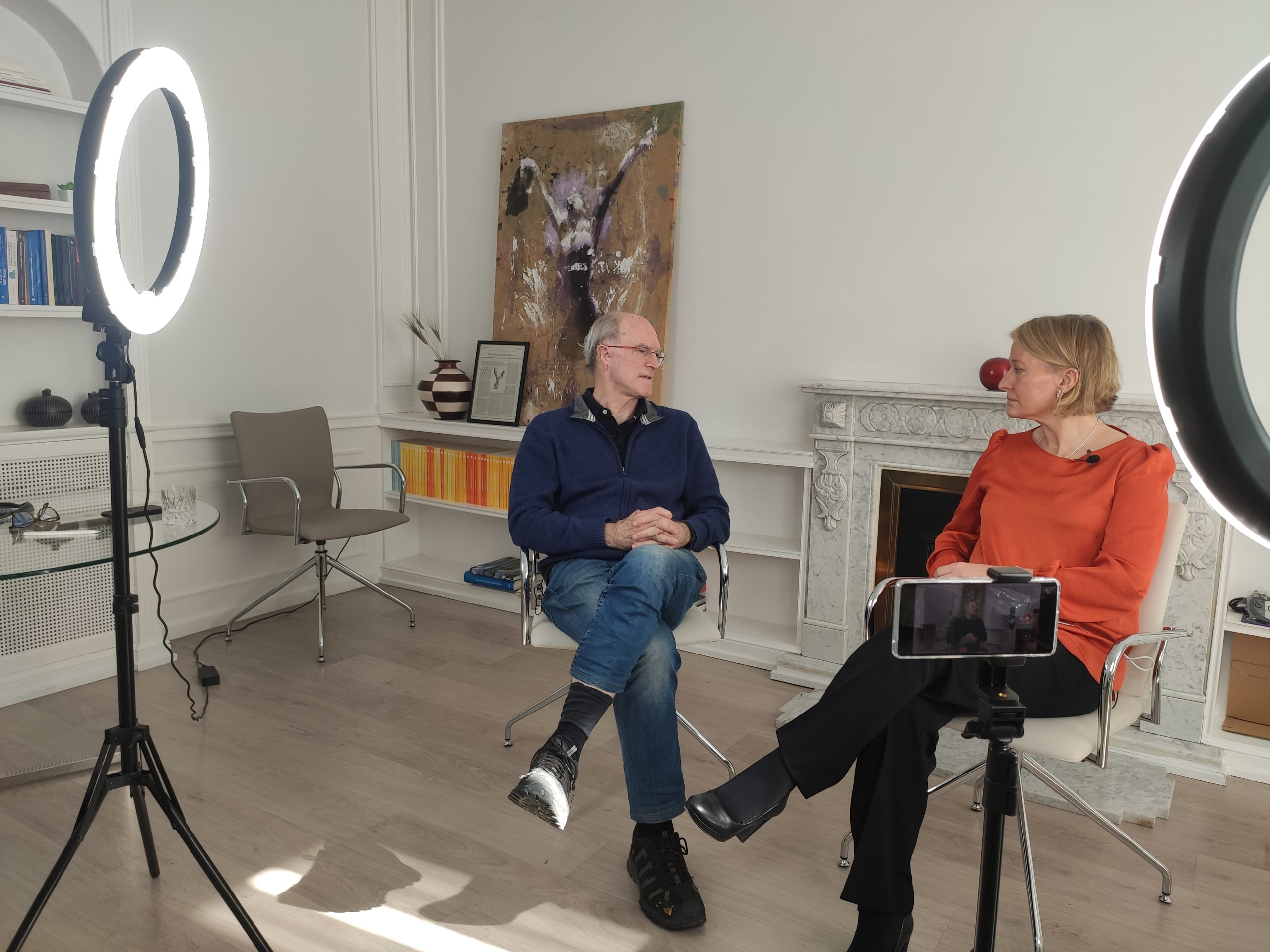
We have interviewed D. Alejandro NavasD. in Philosophy and retired professor of Sociology at the University of Navarra. For more than 40 years, some of Spain's leading media firms and executives have passed through his classrooms. Since his retirement -which is not a rest- he shares with PROA Communication his vision of the trajectory of the media and where they are going in this turbulent time of rapid change in all areas, which is leading us towards minority media with quality content for a more qualitative audience.
Professor Navas reviews the history of the media, which he summarises in three fundamental milestones: "Trade, profession and business: trade - the historical media originated in families committed to their environment -, profession - when a trade gains importance, the need to regulate and officialise training is seen - and when this activity acquires more importance, business, economic profit, ends up gaining importance. Families end up ceding their place to large multimedia groups, and this ends up attracting large companies which, in addition to business, discover in the media the capacity to influence. In the end, economic logic rules and this makes it more difficult to save the purity and rigour of the informative task, which is subjected to many pressures".
"The human being is a great storyteller and listener".
The outlook for the media in general, 10 years ahead, looks "uncertain". We are currently in a convulsive context, with "a society in crisis, a globalised world where borders have lost their relevance. People feel lost, disoriented". And this becomes, according to Navas, "a challenge and an opportunity, because human beings are great storytellers and listeners. We need narrative, meaning, significance, models, fun, suspense, entertainment. The challenge for communicators is to be able to tell what is happening, which has become complicated, complex, and this requires a huge amount of contextualisation work, knowing the background, deciphering the signs of the times, giving it a context, a suitable framework. And all told in an attractive way".
He points out that, as well as a challenge, it is an "urgent necessity, because there is so much to do. People want to know.
"Paper has become a minority and this is both a challenge and an opportunity.
It seems that the paper medium, which is perhaps the one with the most uncertain future, has become "something of a minority. It is a fact that the younger generations are not familiar with paper, nor often with the digital editions of newspapers". On the other hand, print media that do a good job are not only maintained, but also increase their circulation. He concludes that it is not clear that the future of paper is "to disappear. It will be a minority product, which will find its niche as long as it provides valuable content for audiences.
To do so, they have to match the demand of their audience. "Today, audience response is known instantly, so a medium that has an editorial line to defend will have to adapt its content to offer it to its audience in a better and more attractive way.
"A quality product will always be accepted".
Professor Navas points out that since Greek theatre there are two great themes that move mankind, "sex-violence and life-death", but not all media "passively bow to the feelings of the audience", and gives as an example the Austrian media empire that owns the television channel Servus, which has "the principle of offering quality content. It is possible to produce quality content.
It also considers the success story of The New Yorkerwho, against the principle of short texts in the internet era, has survived by publishing long essays. "I would like to think that a quality product will always be accepted," he concludes the interview.

Photo: Alejandro Navas talks to Dolors Marco, Director of Health, Pharma and Medical Technology Director of PROA.