

In recent discussions with managers and entrepreneurs, a predominant theme has been the 'Grifols case'.. This crisis, which has shaken the corporate landscape, is seen by many as a distant incident, under the false belief that "this won't happen to me". This perception reflects a worrying lack of awareness of reputational risks, which is in itself a significant risk. This complacency is particularly alarming considering the exponential increase in reputational risks over the last decade. According to Global Factiva-Dow Jones datanegative mentions in the media in Spain have increased by 64% since 2010a clear indicator of the changing landscape of public opinion.
The case of GrifolsThe Gotham report, while unique in nature, is emblematic of a broader trend. Following the publication of the Gotham report, which triggered the current crisis in the company, analysts initially responded with a "there is nothing new".. What is really striking, however, is the atmosphere of distrust and the presumption of guilt that has emerged. This shift in public perception reflects a transformation in the nature of reputational risks, where 60.8% of negative news about companies is now linked to protracted legal proceedings and the presumption of corporate guilt has become the norm.

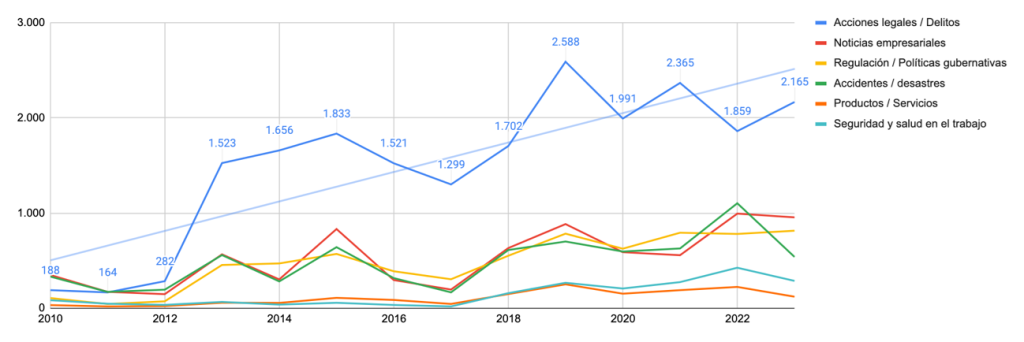
Grifols' situationwhich has seen a dramatic decline of almost 40% in market value in one week, illustrates the fragility of corporate reputation. This case highlights how reputation can be vulnerable not only to internal mistakes, but also to external interests in an environment of increasing corporate litigiousness. This environment is driven by for greater empowerment of the stakeholdersThe EU's role in the global economy has been undermined by a number of factors: stricter regulation, increasing uncertainty - which heightens risks - and aggressive competition where, unfortunately, "anything goes" is often the case.
In response to these challenges, traditional risk management strategies (low profile, discretion, crisis plan...) are no longer sufficient. Boards need to adopt a more proactive and strategic approach. This involves promoting a prudential reputational risk management model, establishing risk tolerance levels and ensuring that these principles are reflected in the corporate culture - everyone in the organisation can make mistakes that impact on reputation - and company communication policies aligned at all levels.
In addition, companies must strive to exceed legal and regulatory compliance standards, aligning themselves with the ethical and social expectations of their stakeholders. stakeholders. This requires a detailed and continuous analysis of reputational risks.The new system, incorporating advanced tools to anticipate and assess the impact of all company actions in which a potential risk can be identified.
In today's digital world, where "today's news is archived in the great digital newspaper archive".In this context, companies need to be particularly attentive to social debates and actively listen to stakeholders. A company's reputation is increasingly shaped by Google news searches and public perceptions formed in the vast digital domain. In this environment, scandals and crises can have a ripple effect, amplified by the speed and reach of social networks and digital media. And this has only just begun, as AIs are learning from this cloud-based library. At present ChatGPT does not yet provide personalised financial advice.But when asked about Grifols, he points out that "there are aspects that could be the subject of debate, such as the ethics of plasma collection, resource management and the environmental impact of its operations" (sic).
Another key aspect is the proactive management of communication.. In the age of instant information, companies must be prepared to respond quickly to crises. This implies, beyond traditional crisis plans, having trained and aligned teams (mainly across risk and communication functions) to handle sensitive situations transparently and effectively. Effective communication during a crisis not only helps mitigate damage in the short term, but can also strengthen long-term trust with the stakeholders.
Finally, it is essential that companies adopt a continuous learning perspective and be open to reviewing and adapting their risk management strategies as new cases, trends and challenges emerge.
The 'Grifols case' teaches us that no business is exempt from reputational risk. In a world where public perception can change rapidly and where mistakes can be significantly amplified, effective reputational risk management is more vital than ever to the survival and prosperity of companies. Companies must be prepared to meet these challenges. with well thought-out risk management strategies, proactive communication and a constant learning attitude.
Juan Cardona Soriano is an advisor to PROA Communication
*If you are interested in learning more about our reputational risk management services, please contact us: info@proacomunicacion.es.